Why NeuroNet Exists
Human signals are the world’s largest untapped data layer.
NeuroNet turns them into intelligence.
NeuroNet is an EEG-first forensic governance engine: a declarative, modular, YAML-driven pipeline that makes every stage of the EEG processing chain — from filtering and cleaning to segmentation, feature extraction, quality control and export — deterministic, explainable and fully audit-ready.
The Missing Infrastructure
Every biological signal — EEG, ECG, EMG, respiration, biochemistry — is still trapped
in noise, variability and non-reproducible pipelines.
The world treats physiology as raw waveform data.
NeuroNet treats it as computable intelligence.
It removes noise, ambiguity and operator-dependent variability with a deterministic
signal engine designed for scientific and clinical reproducibility at scale.
A Deterministic Signal Engine
Legacy pipelines depend on fragile scripts, heterogeneous toolkits and undocumented
operator choices.
NeuroNet replaces this entire ecosystem with a deterministic signal layer
that turns physiology into governed, computable intelligence.
This is not just processing.
It is governance for human physiology.
Explainable AI, Not Black Boxes
AI in healthcare fails when it becomes opaque. NeuroNet does the opposite.
Its architecture integrates interpretable AI modules, causally grounded signal models,
and LLMs acting as intelligent clinical agents.
Every output is explainable, verifiable, contestable — not just accurate, but accountable.
The Network Effect of Physiology
Once signals are standardized, cross-modal intelligence emerges.
EEG informs ECG. Respiration refines autonomic inference. Movement explains metabolic drift.
Longitudinal patterns unlock prediction.
This is the first platform where biological streams reinforce each other —
the same way the internet allowed computers to reinforce each other.
NeuroNet becomes the foundational layer for a new class of applications in medicine, wellness,
research, and human–AI integration.
How NeuroNet Works
A deterministic, modular and fully explainable architecture — built on EEG today, designed to onboard any human signal tomorrow.
Deterministic Signal Engine
A fully declarative EEG pipeline defined in YAML: every transformation is explicit, traceable, verifiable and free from hidden behaviour. Same configuration → same output → same hash.
Modular Signal Architecture
Filtering, cleaning, fallbacks, feature extraction, QC and exporting are independent, side-effect-free modules. They can evolve without regressions and without breaking each other.
Signal Enforcement
Not just cleaning: formal physiological constraints on amplitudes, bands, drift, symmetries and outliers. The signal has to “compile” before it is analysed.
Clinical Consistency Checking
Segmentation, phenomena, bands, artefacts, features and QC must be coherent with each other. A computed clinical check — not just QA.
L1 → L4 Segmentation Model
Four-layer segmentation: integrity, events, physiological constructions, synthetic knowledge. Applied to EEG today, ready to be extended to other signal modules tomorrow.
Explainable AI Layer
The pipeline runs with AI-OFF. When enabled, AI remains interpretable, verifiable and traceable via SHAP and declarative parameters.
LLM Orchestration Layer
LLMs do not analyse the EEG. They explain the pipeline, validate YAML and generate correct configurations. The system is completely LLM-agnostic.
Golden Tests & Reproducibility
Golden test set, regression detection, hash-based differences and automated tests guarantee enterprise-grade stability.
Cross-Modal Intelligence (Future)
EEG today. In the future, coherent multimodal correlations: ECG, respiration, movement, longitudinal patterns. A consequence of the architecture, not a commercial promise.
Future-Proof Computing Layer
Designed for new sensors, on-device compute, multimodal models, neural interfaces, digital physiology and real-time explainable AI.
In NeuroNet, AI is an optional layer on top of a deterministic engine: the pipeline can always run with AI-OFF. When AI is enabled, every model remains explainable, testable and governed via YAML — never a black box deciding directly on patients.
Built on EEG. Architected to onboard any human signal.
EEG Data Services (coming soon)
Technical data services only — strictly non-diagnostic and not for clinical use.
NeuroNet is being built as a forensic governance and advanced analysis infrastructure for EEG, engineered to support, over time, a broader ecosystem of biosignal applications. The first line of paid services we are preparing focuses on EEG data processing for research and R&D projects, offered exclusively as non-diagnostic technical services with no clinical reports, conclusions or patient-level decisions.
The approach is EEG-first, with a radical focus on governance, traceability and anti–black-box practices. In this initial phase, NeuroNet services are exposed only as a research-grade technical layer: cleaned signals, features and quality metrics with full forensic traceability. The services described here deliver technical outputs and structured datasets (e.g. cleaned traces, feature matrices, QC indicators) and are not intended for diagnosis, clinical interpretation or therapeutic decision-making. This is the controlled, research-oriented commercial surface of an infrastructure that is being built to underpin, over time, a broader governance platform for biosignals.
NeuroNet EEG Governance Core
In advanced developmentForensic governance service for EEG pipelines: definition and tracking of the signal processing flow, not its clinical interpretation.
What it will do
- Full definition of the EEG pipeline via YAML (filters, QC, segmentation, features, AI ON/OFF).
- End-to-end traceability: file hashes, manifests, signed technical logs across the entire pipeline.
- Versioning of parameters and configurations to guarantee reproducibility and audit trail.
Why it matters
- To turn EEG preprocessing and analysis from a black box into an auditable, defensible process.
- To provide a common base on which to build, compare and evaluate different models.
Status: module in an advanced stage of development and internal testing.
Planned availability: initially through pilot projects and PoCs with research partners, then as a paid EEG data processing service for the R&D phase of the NeuroNet platform (non-diagnostic use, no clinical reports or decisions).
We are defining the first PoCs and pilot contracts for this EEG data service.
Intended use: research and technical governance only — not for diagnosis or clinical decision-making.
NeuroNet EEG DataLab
Coming soonEEG data processing service for research and model development: preprocessing, Quality Control and feature extraction. No reports, only technical datasets.
Planned capabilities
- Standardised EEG preprocessing (cleaning and artefact removal).
- Quality Control with structured metrics and technical data quality reports (non-clinical).
- EEG trace segmentation and feature computation (e.g. frequency bands and other descriptive indices).
Expected outputs
- Cleaned and segmented EEG signals.
- Feature matrices ready to be used in AI models or statistical analyses.
- Technical logs and manifests for full traceability of the processing pipeline.
Status: in development and internal integration for use in research and R&D contexts (non-clinical).
Planned availability: as a paid EEG data service, designed as a component of the R&D phase of the NeuroNet ecosystem for research groups, companies and centres developing AI models, always in a non-diagnostic context.
A first controlled commercial beta is planned with a limited number of partners.
Intended use: research and technical governance only — not for diagnosis or clinical decision-making.
Intended use & roadmap note
The NeuroNet services described on this page do not deliver clinical reports, diagnoses or therapeutic recommendations and are not intended for direct use in patient management. They provide data processing only: technical metrics and structured datasets for research and R&D projects run by clinical teams, academic groups and industry partners. The commercial model is B2B paid services, starting in pilot form and, over time, as a stable offering on top of the same governance and traceability infrastructure.
These services represent the initial, research-oriented phase of NeuroNet’s evolution. Any future extensions towards clinical pathways or decision support would be developed only through dedicated validation programmes and in compliance with applicable regulatory requirements; nothing in this section should be interpreted as a claim of clinical performance, safety or regulatory status.
Example technical outputs — today strictly non-diagnostic
Today NeuroNet operates only as a technical and forensic layer: cleaned signals, quality metrics and a full chain-of-custody trail — never clinical reports, interpretations or therapeutic recommendations.
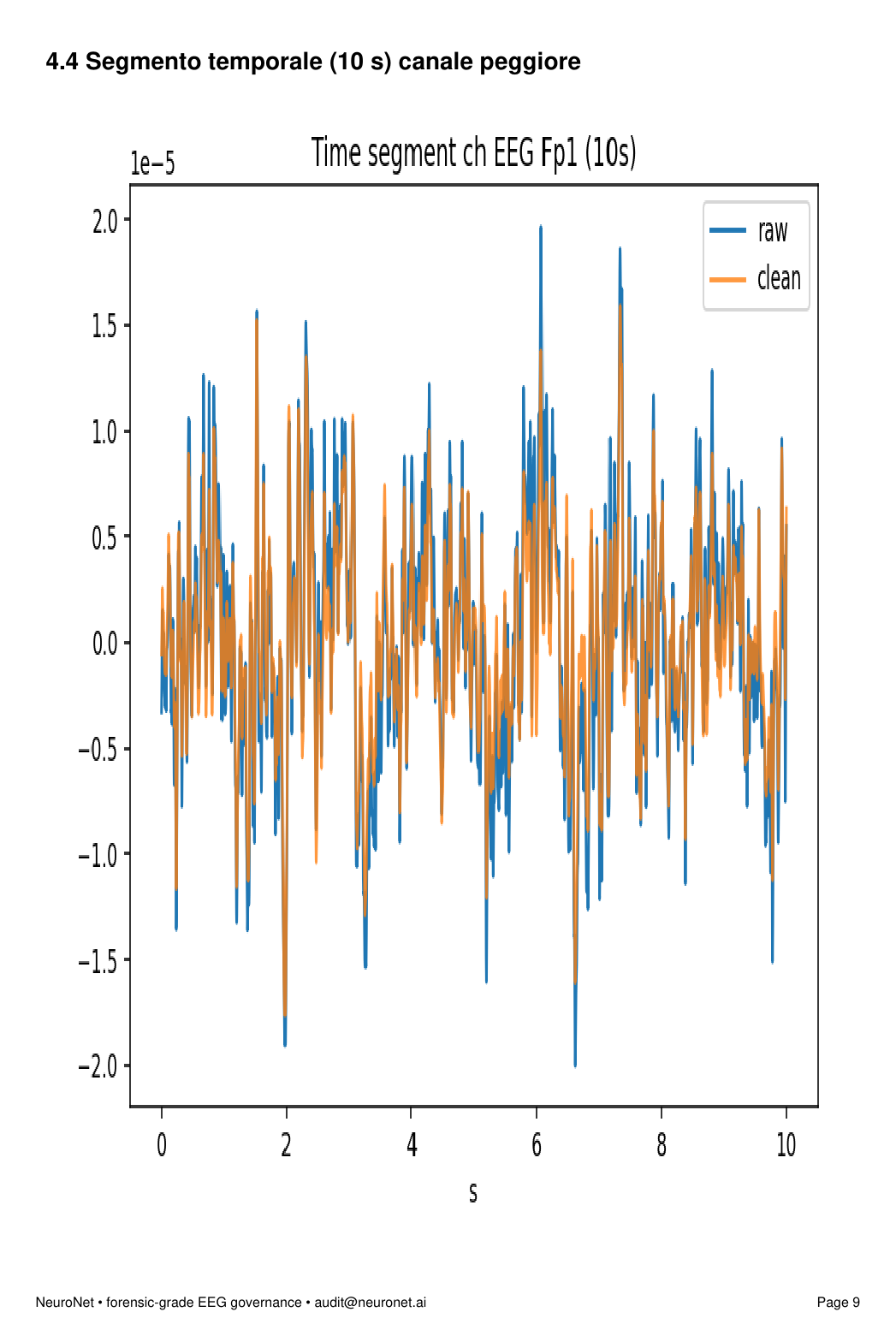
Per-channel cleaning view
Artefact masks, usable duration and before/after traces for each EEG channel.
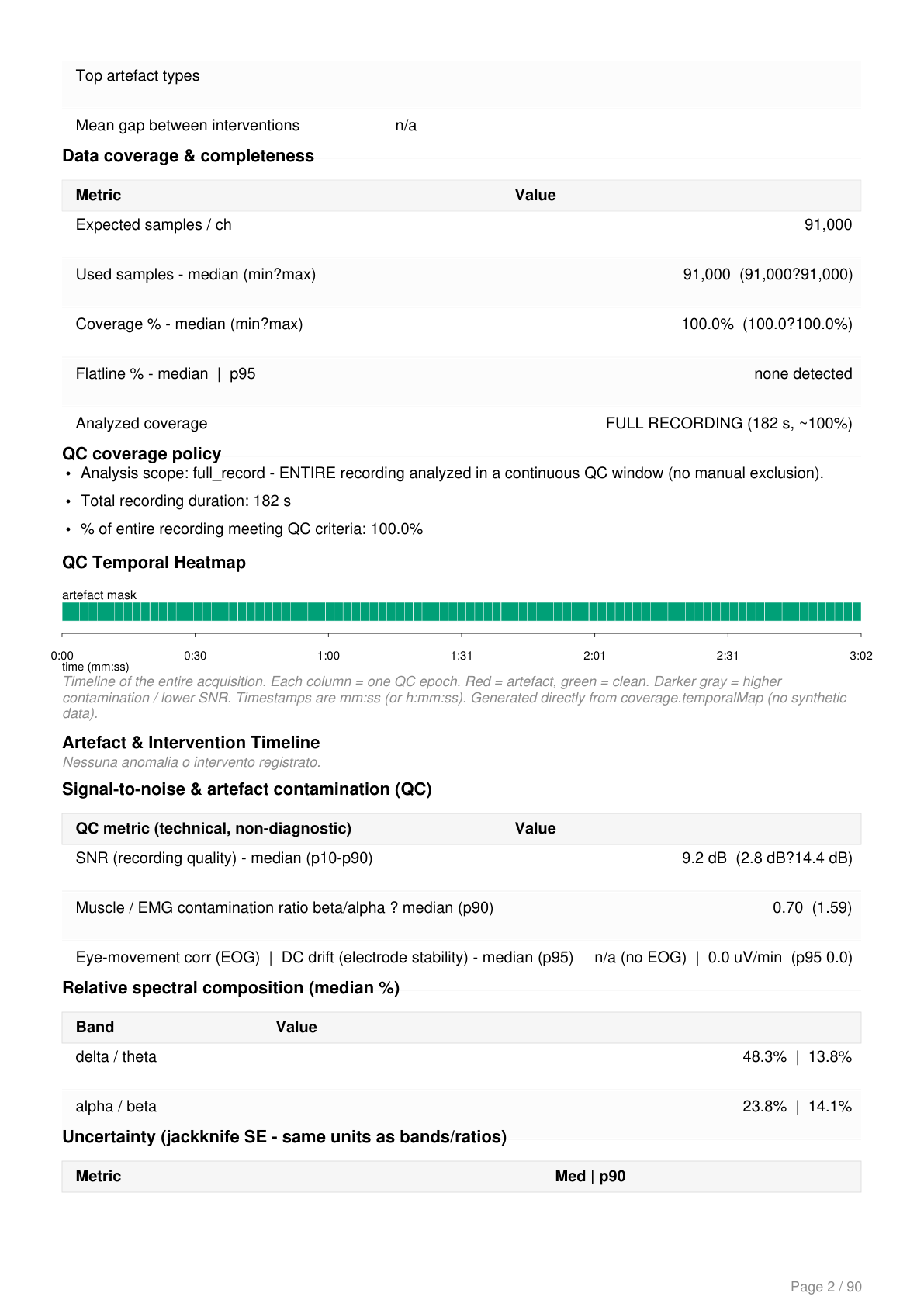
EEG QC summary report
Global QC score, channel-level rationale and technical hashes for every run.
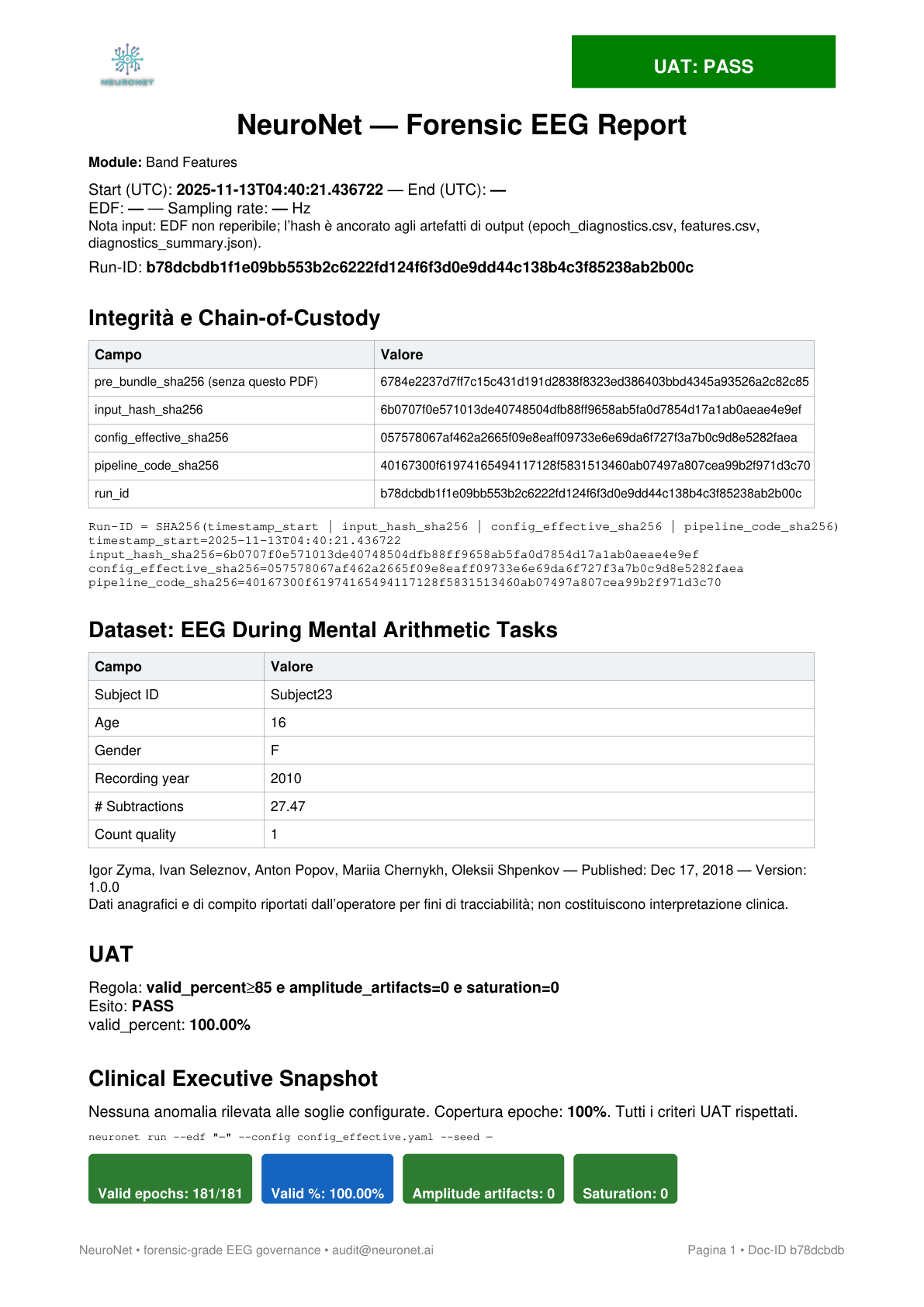
Forensic delivery manifest
Signed technical delivery note with files, manifests and timeline hashes.
Screenshots shown are real NeuroNet outputs on de-identified EEG datasets: identifiers and values may be obfuscated, but the report structure, logic and QC rules are exactly those of the production engine.
These outputs are designed for research, R&D and technical governance only. Any clinical use would require dedicated validation and regulatory clearance.
Roadmap
A compact timeline: from the deterministic EEG engine to the first PoCs with centres, through European programmes, cloud ecosystem and first corporate steps.
This public roadmap is only a high-level summary. It does not include the clinical, technical, regulatory, security, IP and go-to-market details, nor the more sensitive operational milestones, which remain in non-public documentation shared only with partners, clinical centres and qualified investors.
Fields of Application (first wave)
NeuroNet starts as an EEG-first forensic governance layer and grows into a standard for biosignal intelligence. These are the first segments where a deterministic, audit-ready EEG process creates value — with additional markets lining up on the same infrastructure.
Clinical EEG Labs & Tele-Neuro Networks
BeachheadHospital EEG units, sleep labs and multi-site tele-neuro networks that need uniform technical quality, traceable pipelines and audit-ready data across operators, days and locations.
What NeuroNet brings
- Deterministic, YAML-defined EEG pipelines with manifest & hash per run.
- Forensic QC trail: no-PHI technical logs, UAT / delivery note, site-level fleet view.
- A governed signal layer that standardises quality across operators and locations.
Neurotech, BCI & Research Labs
Parallel R&DAcademic groups, BCI teams and neurotech startups that need reproducible EEG experiments, solid provenance and publishable datasets that reviewers and partners can trust.
What NeuroNet brings
- API / SaaS plus desktop runner with deterministic YAML, seed / env capture and manifest / hash.
- Re-run links and effective-config snapshots for every experiment.
- Clean signals and feature matrices ready for in-house models and statistics, with no lock-in.
Pharma, CRO & Forensic-Grade Trials
Regulated partnersPharma sponsors, CROs and medico-legal teams that need GxP-ready forensic QC on EEG and related biosignals for trials, devices and expert opinions.
What NeuroNet brings
- Forensic QC pack: manifest / hash, effective config, policy rules, timelineHashSha256, signed delivery note.
- TMF-ready exports and UTC-aligned timelines for every processed signal.
- A neutral, audit-safe technical trail that supports inspections and expert review, without touching diagnosis.
Next markets on the same infrastructure
The same governed EEG layer naturally extends to additional segments as we scale.
Who is actually building this
NeuroNet is an EEG-first engine designed with the rigor of critical infrastructure: declarative pipelines, stable quality rules and continuous verification on every release. It is built for EEG labs, clinical centres and research groups that need technical traces and datasets able to withstand the scrutiny of clinical boards, ethics committees, industrial partners and investors.
Who is building NeuroNet
A compact core team at the intersection of neuroscience, AI and signal governance – designed to work with clinicians, research groups and investors, not to be a LinkedIn wall.

Davide Brugognone
Founder & CEO · Member, EIT Health Innovators Community
Creator of NeuroNet’s EEG-first governance layer, with 15+ years in IT across enterprise infrastructures, cybersecurity and software development. As the sole IT Manager for his department he designed and ran networks, business continuity and backup systems; as founder and architect he has built modular EEG pipelines, ML models and end-to-end AI prototypes, up to an EEG+AI architecture currently covered by a provisional patent filing with the USPTO.
- Architecture & product: designs NeuroNet as an infrastructure, not a one-off tool – declarative YAML pipelines, technical manifests, regression tests and hash-based traceability across the entire signal chain.
- Applied AI & engineering: hands-on experience developing AI/ML systems and in projects such as NeuroNet BCI for the “AI for Inclusion” hackathon and Project999 for the IPZS “Innovation Challenge”, combining signals, blockchain and intelligent models with strong focus on robustness and reproducibility.
- Ecosystem & community: member of the EIT Health Innovators Community and author of publications on cybersecurity and IT technologies, with a growing focus on aligning NeuroNet to the concrete needs of clinicians, researchers and industrial partners.

Barkha Khurana
Head of Artificial Intelligence & Neuroinformatics
AI & neuroscience specialist with 15+ years in academia and clinical-facing research, now PhD Research Scholar in AI Neuroinformatics at UMFST Târgu Mureș on an AI-based Neuro Information System for diabetic neuropathy. She connects EEG, neuroimaging and AI-driven pain models to build explainable tools for neurological disorders and chronic neuropathic pain.
- Clinical AI & pain intelligence: designs EEG-based chronic neuropathic pain prediction systems, deep-learning pain classifiers and decision-support models that integrate electrophysiology, symptoms and imaging.
- Scientific track record & teaching: 20+ publications, books and book chapters across neurology, physiotherapy and AI in healthcare, with awards such as Dynamic Professor of the Year, Innovative Professor of the Year and Academic Excellence.
- Neurodiagnostics & governance: hands-on experience across EEG, fMRI, NCV and MR neurography, including a record-length 4-hour MR neurography session, plus roles in research committees and the IEEE Brain Community that bring governance discipline into everyday lab practice.

Nitin Rodhia
R&D Engineer · Cognitive Microprocessors
AI SoC and neuromorphic hardware engineer with 15+ years across AI-driven SoC design and RF network optimisation, now focused on ultra-efficient compute for real-time EEG and bioelectrical analysis.
- AI SoC & chip design: RTL design and verification for AI/ML accelerators and GPU cores, integrating ARM Cortex, PCIe and DDR controllers and driving timing-closure and PPA optimisation workflows.
- From RF to secure infrastructure: 12+ years in 3G/4G RF planning and optimisation, including leading CDMA projects with the Indian Army at high-altitude battlefields and receiving recognition from operators and vendors.
- Edge AI & BCI roadmap: research focus on AI chips, brain–computer interfaces and implantable neurotechnology, aligning NeuroNet’s future on-device and neuromorphic compute layer with its governed EEG stack.
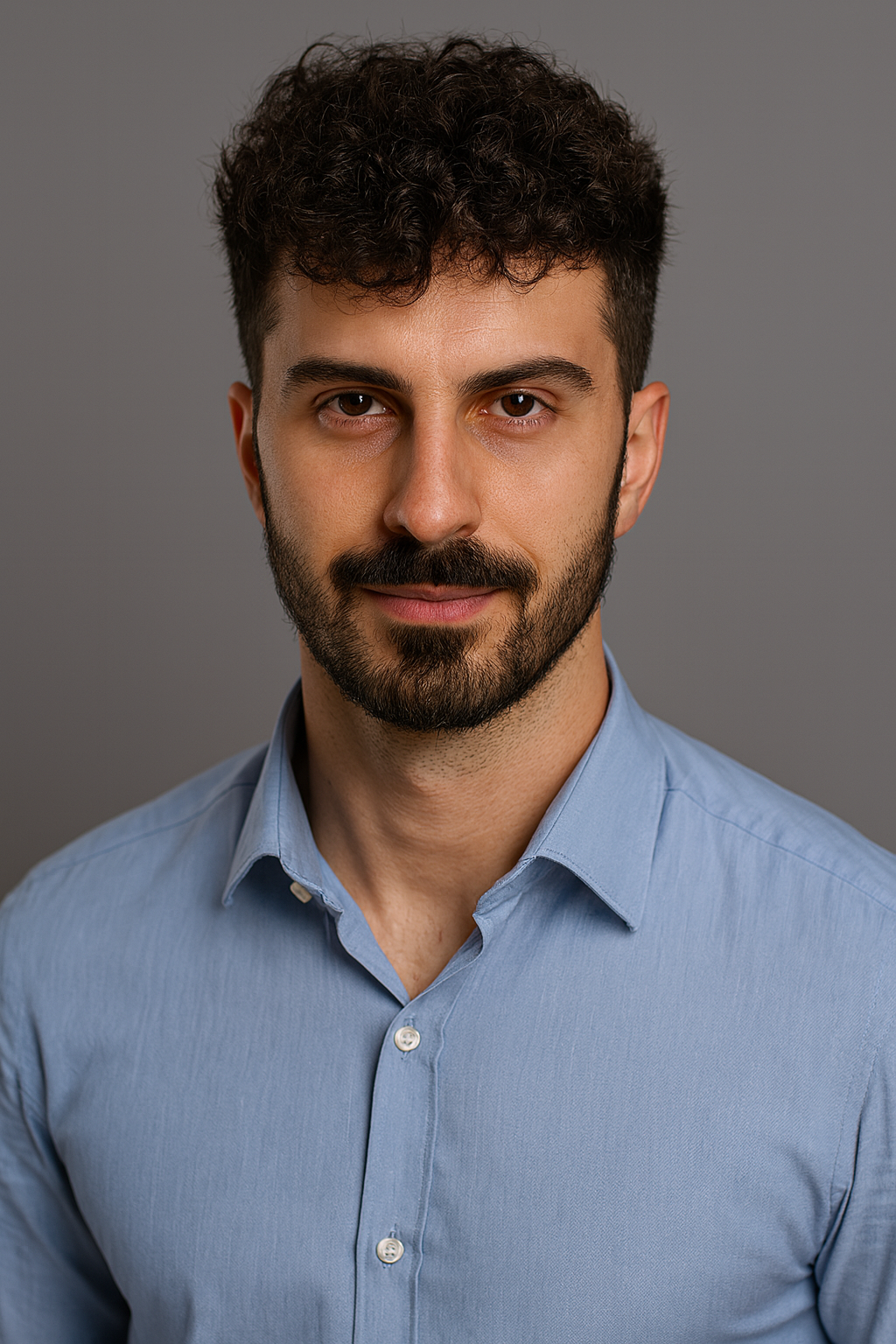
Davide Angelo Palmisano
Tech Evangelist & Strategic Communicator
Digital marketing and analytics specialist with experience leading global and national teams at AIESEC International and AIESEC Italy, and supporting AI-focused initiatives at Alterna International. He connects paid media execution, data pipelines and reporting to give NeuroNet a clear, measurable go-to-market engine.
- Global marketing operations: directed a virtual team of 25 marketers at AIESEC International, introducing A/B testing and predictive analytics, increasing leads by 13% and conversion rates by 22% while reducing data processing time by 60%.
- Performance & analytics: hands-on work with Meta Ads, Google Ads, Google Analytics, Looker Studio and UTM tracking to design dashboards and optimise funnels, including cases with 50% sales growth and a 55% faster lead-to-sale process.
- Background & training: studies in Marketing and Communication at La Sapienza (thesis on a government system based on blockchain), SQL training for data analysis and IBM Product Management coursework, fluent in English and Italian.
Around this core team we are progressively assembling a focused scientific and clinical advisory layer — neurologists, neurophysiologists and regulatory specialists — to guide how NeuroNet’s EEG governance engine is validated, deployed and scaled.
What you can do now
Three ways to plug into NeuroNet today — depending on whether you run a lab, back infrastructure, or build.
Run a forensic-grade EEG PoC
For hospital EEG units, tele-neuro networks and research groups that want deterministic preprocessing, QC and chain-of-custody on real-world EEG — without touching diagnosis.
- Define a YAML-based EEG pipeline on your own data (filters, QC, segmentation, features).
- Get a forensic technical pack: manifests, hashes, QC metrics, effective config.
- Start small: a focused pilot on a subset of studies, not a marketing demo.
Invest in the signal layer
For investors and strategic partners who see EEG and biosignals as critical infrastructure: deterministic governance, not another opaque AI app.
- Understand the infrastructure thesis: EEG-first, multi-signal by design.
- Review roadmap, technical depth and governance-first positioning.
- Explore co-designed paths with clinical, pharma and neurotech ecosystems.
Join the builders
For people who build: signal engineers, clinicians, AI researchers, hardware and product profiles who want to shape how biosignals are governed and computed.
- We look for people who have already shipped things: code, papers, products or systems.
- Profiles spanning EEG / signal processing, explainable AI, edge / neuromorphic compute, clinical neurophysiology, regulatory.
- From deep technical contributions to focussed collaborations on PoCs and research.
We read and respond personally. No mailing lists, no automated funnels.
 #12 Preventive Healthcare Global
 Top 10 BCI Global
 Google for Startups Cloud Program
 Venture Builder Program · Master Recreation Labs 2024–2027